1. Track Every Payout and Purchase
Write down each time you buy a game, download an expansion, or pay for a subscription. Use a simple spreadsheet with columns for date, title, price, and notes. At the end of the month, you’ll see exactly where the money went. If you notice a pattern—say, you always buy new releases on release day—consider setting a rule to wait 48 hours before making that purchase.
2. Create a “Wishlist” and a “Must‑Buy” List
Separate the games you’re excited about from the ones you’re merely curious about. Allocate a fixed amount—£10 per month—for the “Must‑Buy” list. Anything beyond that sits in the wishlist until you have spare funds or a sale. This keeps impulse buys at bay and ensures you’re spending on titles that truly matter to you.
3. Use Time‑Based Limits on Free‑to‑Play Titles
Many free games monetize through micro‑transactions. Set a daily playtime limit—15 minutes on weekdays, 30 on weekends—using your device’s built‑in screen‑time feature. When the timer rings, step away. This simple habit prevents the “just a few more minutes” trap that can turn free play into a hidden expense.
4. Take Advantage of Seasonal Sales and Bundles
Major platforms run sales three times a year: Summer, Winter, and a mid‑year event. Instead of buying a game as soon as it drops, wait for the next sale. A 50% discount on a £60 title saves you £30, which is more than enough to cover a month’s worth of extra games. Bundle deals can also offer a 20% saving on three games for the price of two.

5. Review Your Budget Quarterly
Every three months, revisit your spreadsheet. Ask yourself: Did I overspend? Which titles brought the most joy? Adjust your monthly cap if necessary. If you consistently stay under £25, consider lowering the limit to free up money for other hobbies.
Smart budgeting for online gaming is not about depriving yourself; it’s about making deliberate choices that align with your priorities. By tracking expenses, setting clear lists, limiting playtime, exploiting sales, and reviewing regularly, you can enjoy the games you love without breaking the bank.
For those who juggle gaming with other online entertainment, a well‑structured budget can also free up funds for music streaming, e‑books, or even a few nights out. If you’re looking for a place to relax after a gaming session, consider checking out patrick spins casino for a different kind of online leisure.
Which Approach to Pick?
Start with the tracking step—once you know where your money goes, the rest follows naturally. If you’re prone to impulse buys, the wishlist rule will be your best friend. For those who play free titles, the time limit is a lifesaver. Whichever method feels most comfortable, the key is consistency. Stick to your chosen tactics, review them quarterly, and you’ll find that online gaming can remain a fun, affordable part of your life.
Frequently Asked Questions
What’s the first step to controlling my gaming budget?
Set a strict monthly cap and commit to it, treating it like any essential bill.
How can I track my spending without extra effort?
Use a spreadsheet or budgeting app to log every purchase instantly—just a quick note after checkout.
What if I accidentally exceed my limit?
Pause spending, review your list of priorities, and consider reallocating funds from less essential categories.
Step 1: Claim the No‑Deposit Offer
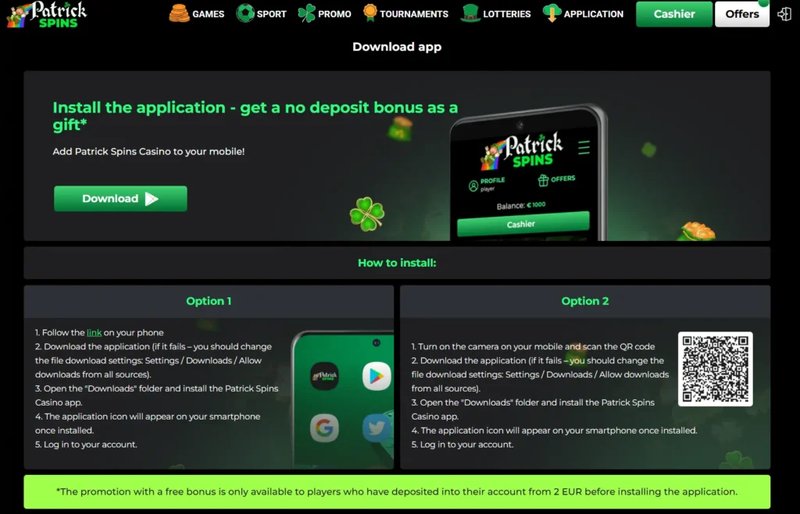
First, go to the Patrick Spins casino landing page and click the “Sign Up” button. Fill in the usual details: email, username, and a password. Once you confirm your account, the bonus is automatically added—no code needed. The bonus amount is £10, and you can start spinning immediately. The only catch? You must claim the bonus within 24 hours, or it disappears.
Step 2: Spin and See What Happens
After the bonus lands, head to the slots section. The most popular title is “Mystic Fortune,” which has a 96% RTP. With the £10 bonus, you can play up to 100 free spins. If you land a 5‑symbol win, you’ll receive a free bonus credit that can be used on any game. This is a good way to gauge the casino’s software quality before risking real money.
Step 3: Convert Wins to Real Cash
If you hit a win that exceeds £5, you can transfer the bonus credits to your main balance. The casino requires a minimum withdrawal of £20, and you’ll need to verify your identity with a photo ID and a recent utility bill. Once approved, withdrawals are processed within 48 hours for bank transfers, and under 24 hours for e‑wallets.
What Makes Patrick Spins Stand Out
- Fast payouts: Most withdrawals reach the player within two business days.
- Variety of games: Over 300 titles from NetEnt, Microgaming, and Quickspin.
- Mobile friendliness: The mobile app is lightweight and loads in seconds.
Real‑World Drawbacks
While the no‑deposit bonus is generous, the wagering requirement is 30x the bonus amount plus any winnings. That means a £10 bonus becomes a £300 requirement. Only a few games contribute to the requirement, so it can feel slow. Also, the maximum bet on most slots is capped at £2, which limits high‑roller potential.
How to Avoid Common Mistakes
Many players forget to check the “bonus terms” before claiming. A quick glance will show that the bonus expires in 7 days if not used. Missing this window means losing the £10 entirely. Also, don’t try to withdraw bonus credits directly—always transfer them to the main balance first.
Final Verdict
Patrick Spins Casino offers a solid no‑deposit bonus that lets you test the casino without risk. The bonus is easy to claim, the games are top‑tier, and withdrawals are swift. The main downside is the high wagering requirement and low maximum bets, which can frustrate players looking for instant big wins. If you’re a casual player wanting to explore slots, the offer is worth a try. For high‑stakes enthusiasts, the restrictions might feel limiting.
Ready to spin? Visit patrick spins and see how far a free credit can take you.
Frequently Asked Questions
What is a no-deposit bonus at Patrick Spins?
It lets you receive free spins or credits without depositing money, giving you a risk‑free chance to play.
How do I claim the no-deposit offer?
Click Sign Up, fill in your details, and the bonus is credited automatically once your account is verified.
Can I withdraw winnings from the no-deposit bonus?
Yes, after meeting the wagering requirements, you can cash out eligible winnings.
Is the bonus valid for all games?
It typically applies to selected slots, but check the terms for specific game eligibility.
Understand the Heat Output You Need
Heat output is measured in British Thermal Units (BTUs). A typical 2‑story home with 1,200 square feet usually requires a stove that delivers 10,000–12,000 BTUs. If your house is larger or you live in a colder climate, aim for 15,000–18,000 BTUs. Don’t just pick the biggest model you see; calculate the square footage of the room and divide by 50 for a rough estimate of BTUs needed.
Tip: Measure the area you want to heat and multiply by 50. If the result is 12,000, a stove in the 12,000‑BTU range is a good match.
Check the Efficiency Rating
Efficiency is expressed as a percentage. A 90% efficient stove converts 90% of the fuel’s energy into heat, leaving only 10% as waste. Stoves with efficiencies above 90% are common, but the top models can reach 95%. Higher efficiency means lower pellet consumption and a smaller carbon footprint.
Example: A 10,000‑BTU stove at 92% efficiency burns about 2.5 lb of pellets per hour. If you run it for 8 hours a day, that’s 20 lb of pellets daily. Compare that to a 90% efficient model that would use 21.2 lb for the same output.
Consider the Burn Time and Fuel Capacity
Burn time is the duration a stove can run on a full hopper before refilling. A 1‑ton hopper (about 1,000 lb of pellets) on a 10,000‑BTU stove at 92% efficiency will burn for roughly 4.5 hours. If you prefer a stove that runs for 6 hours on a single load, look for a model with a 1.2‑ton hopper or a higher BTU rating.
Also note the refueling interval. A stove that needs refilling every 2 hours is impractical for a busy household, whereas one that lasts 8–10 hours between refills offers real convenience.
Look at the Controls and Features
Modern stoves come with digital displays, programmable timers, and even Wi‑Fi connectivity. A programmable timer lets you set the stove to start at 6 pm and shut off at 10 pm, saving fuel. Wi‑Fi control allows you to adjust settings from your phone, which is handy if you’re away from home.
However, added features can increase the upfront cost. If you’re on a tight budget, a simple manual control stove can still deliver reliable heat.
Maintenance and Cleaning Requirements
Pellet stoves need regular cleaning of the combustion chamber, heat exchanger, and ash pan. A model with a large ash pan that can be removed easily will save you time. Some stoves have a “clean‑when‑full” indicator that reminds you when to empty the ash.
Remember: a stove that requires daily ash removal is less convenient than one that allows a full day of use before cleaning.
Bridge to Online Gaming and Entertainment
When you’re cozy by the stove, it’s easy to think about other ways to relax. Many people turn to online gaming for a quick break, and platforms like woodpelletstove.co.uk offer a range of titles that can be played while you wait for the heat to spread.
Final Thoughts
Choosing the right wood pellet stove boils down to matching BTU output, efficiency, and hopper size to your home’s needs, then balancing those specs against your budget and maintenance willingness. Measure your space, calculate the required BTUs, pick a stove that meets or slightly exceeds that number, and enjoy a warm, efficient, and hassle‑free heating solution.
Frequently Asked Questions
What BTU range should I look for in a wood pellet stove?
Aim for 40,000 to 80,000 BTUs for a typical 2‑story home; lower for smaller spaces.
How does efficiency affect my energy bills?
Higher efficiency (around 80‑90%) reduces fuel consumption, cutting costs and waste.
Should I choose a stove with a built‑in fan or a fanless model?
A built‑in fan offers quicker, more even heat, but fanless models are quieter and require less maintenance.